

General Ambulance Configuration Parameter Standards, 2023 Essential Details for the Health Industry!
Release time:
Feb 24,2025
Source:
The standardization of ambulance configuration parameters becomes especially critical in the health sector in 2023.

The standardization of ambulance configuration parameters has become especially critical in the health industry in 2023. Next, we will delve into the details of each ambulance configuration and its importance.
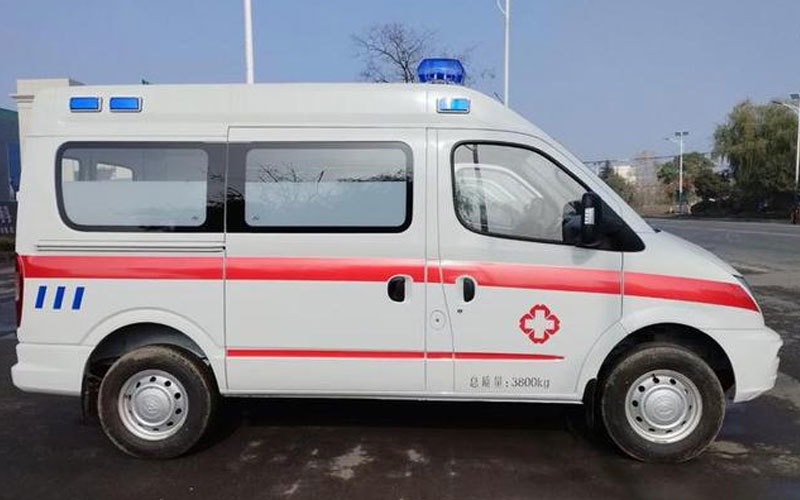
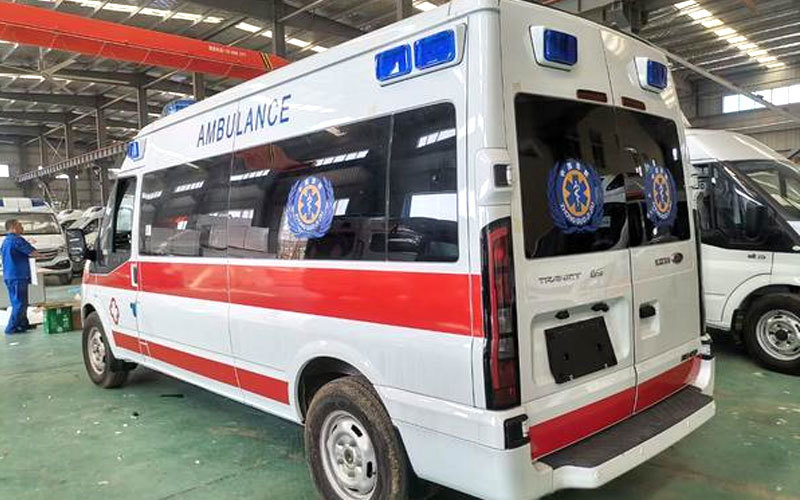
First of all, regarding the design of the medical cabin, the right side of the compartment, the compartment door and the rear door are equipped with openable glass windows, which are half-applied with opaque film to ensure privacy and allow a certain amount of light to pass through. The Custody Transit Ambulance utilizes a hydraulic dual-circuit braking system and is equipped with an ABS antilock braking system to greatly improve safety on the road. The electrical system consists of a 14/150 generator and a 12/100 battery.
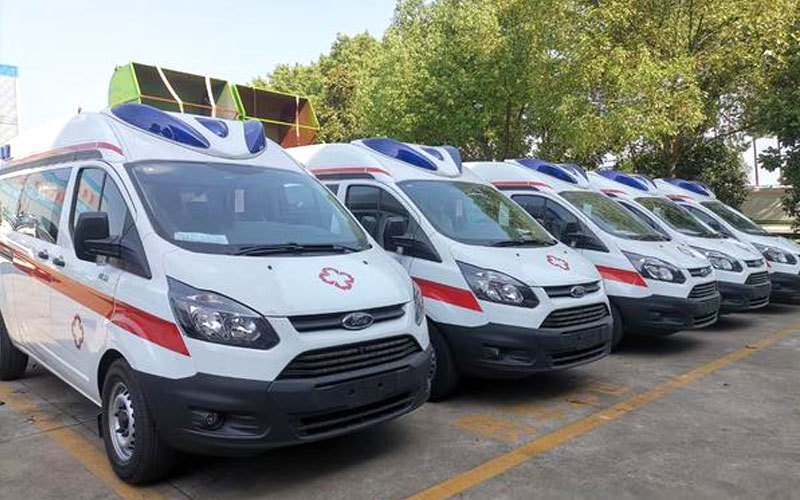
The Transfer Custody Ambulance excels in safety systems. It is equipped with ESP electronic body stabilization program, ASR anti-skid system, EBD electronic brake force distribution system, and BAS brake assist system, which provide all-around protection for drivers and patients. In addition, the cab features a secure steering column, seat belts and dual airbags. The medical compartment is independently fitted with ducted air conditioning and ventilation, as well as multiple LED lights and rotatable spotlights, and a sterilizing UV light.
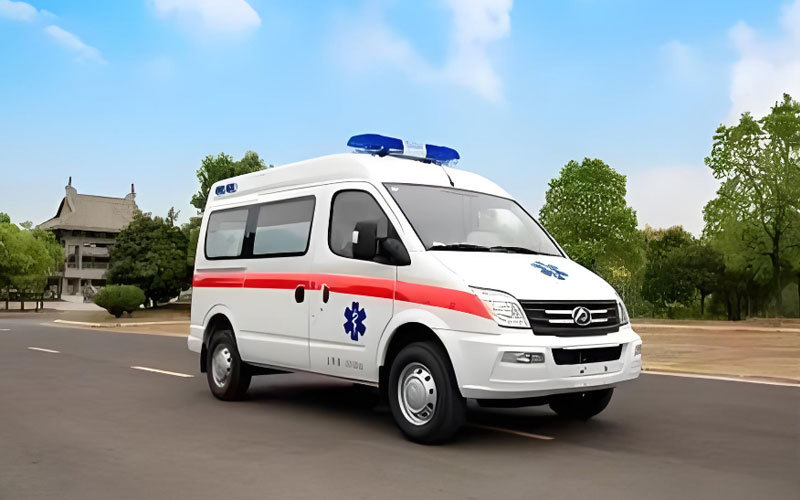
The central power distribution system is the heart of the ambulance electrical system. It adopts an intelligent power management system, which can automatically manage the electricity consumption of the whole vehicle and ensure that the engine battery has sufficient power to start the vehicle at any time. The cab is also equipped with a microcomputer central controller, which is convenient for the driver to monitor and adjust the vehicle status at any time. In addition, a number of 220V sockets are installed in the medical cabin to meet the power needs of various medical equipment.
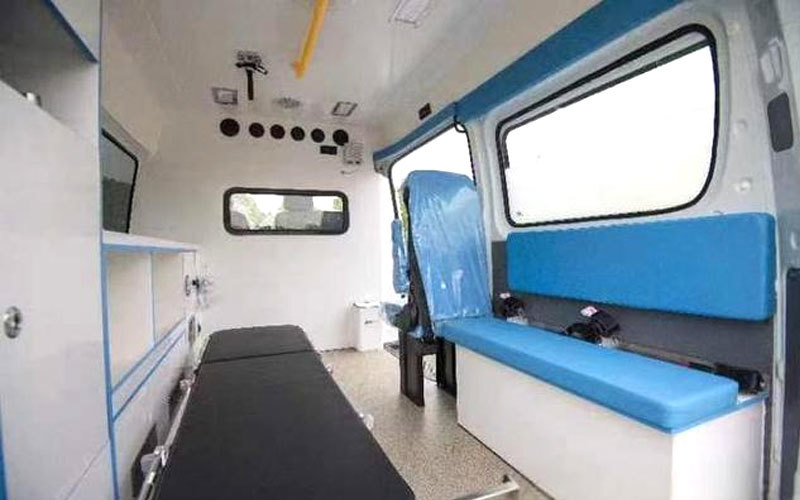
The standardized ambulance also has an emergency alarm system as one of its key features. The cab is equipped with alarm and light control buttons, as well as a siren with three alarm sounds. The medical compartment also has a waterproof, external power socket with a protective cover to ensure quick access to external power in case of emergency.
The emergency alarm system of an ordinary ambulance is relatively simple but equally important. It consists of alarm and light control buttons in the cab and a set of three siren sounds. It is also equipped with a 100W power supply to meet basic alarm and lighting requirements.
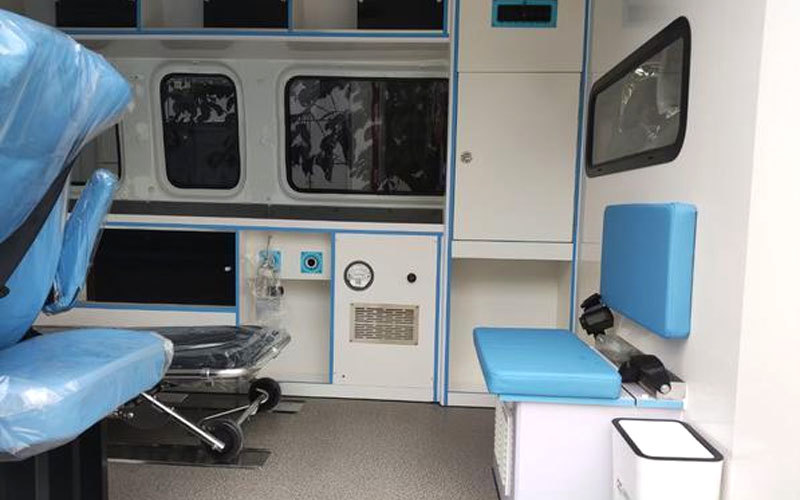
With regard to the internal facilities of the medical module, the floor is made of imported blue acid- and alkali-resistant, fire-resistant and non-slip material, and the surrounding raised edges are designed to prevent the accumulation of dust and facilitate cleaning. The cabin is also equipped with flip-up seats, equipment cabinets, waste bins as well as a central control system and safety handrails. In addition, according to the structure and needs of different ambulance models, it can also be equipped with other medical machinery and equipment.
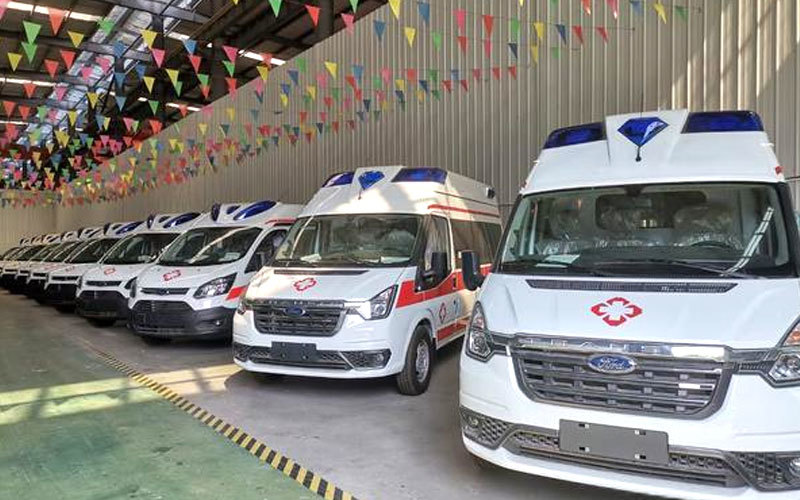
In summary, the standardization of ambulance configuration parameters is essential for improving the quality and efficiency of services in the health sector. Different types of ambulances are equipped with the appropriate equipment and systems according to their functions and needs to ensure fast and safe transfer of patients in emergency situations.
Related news
Essential Accessories for Optimizing Your Ambulance V363 for Maximum Efficiency
Essential Accessories for Optimizing Your Ambulance V363 for Maximum Efficiency In the field of emergency medical services, every second counts. The efficiency and preparedness of ambulances are critical in saving lives. As an ambulance provider, ensuring that your vehicle is equipped with the right accessories can make a significant difference in emergency situations. This article explores essent
Understanding the Ambulance V362: A Vital Tool in Emergency Medical Services
The Ambulance V362 is engineered to provide optimal care during transport for patients in critical situations. One of its standout features is the spacious interior, which allows emergency medical personnel to operate efficiently while attending to patients. The design prioritizes accessibility, ensuring that medical equipment can be easily reached and utilized in urgent circumstances. Safety is p
Exploring the Cutting-Edge Features of the JMC Fushun Ambulance: A Comprehensive Guide
Exploring the Cutting-Edge Features of the JMC Fushun Ambulance Introduction to the JMC Fushun Ambulance The JMC Fushun Ambulance represents a significant advancement in emergency medical services. Renowned for its robust design and innovative features, this ambulance is engineered to meet the rigorous demands of emergency responders. In this article, we delve into the various aspects of the JMC F
Exploring the Versatility of the Mercedes Vito Ambulance: A Comprehensive Guide
The Mercedes Vito ambulance stands out in the realm of specialized vehicles, particularly for emergency medical services. Designed with the needs of healthcare professionals in mind, the Vito ambulance combines functionality with comfort, ensuring that patients receive optimal care during transport. Here are some key aspects to consider when assessing the suitability of the Mercedes Vito for ambul
Elevating Your Business: Discover the Game-Changing Benefits of Aerial Work Trucks
Elevating Your Business: The Benefits of Aerial Work Trucks Table of Contents Introduction to Aerial Work Trucks What Are Aerial Work Trucks? Key Benefits of Aerial Work Trucks Enhanced Safety Features Increased Efficiency in Operations Cost-Effectiveness and Labor Savings Applications of Aerial Work Trucks
Understanding the Role and Importance of Aerial Workers in the Specialized Vehicle Industry
In the specialized vehicle industry, particularly in high-altitude operations like those involving aerial work platforms, the role of an aerial worker is crucial. These professionals are responsible for performing tasks at significant heights, often in challenging environments. Aerial workers are typically engaged in activities such as maintenance, construction, and inspection, making their skills